Cooling Coil Moisture Carryover: Causes and Prevention
by Dan Jacobs, September 2, 2026
Cooling coil moisture carryover occurs when airflow pulls condensation from a chilled-water or DX coil into the air handler or ductwork. Common causes include excessive air velocity, tall coils, high humidity and inadequate drainage.
Keep Air Velocity Under Control
Cooling coil face velocity should generally remain below 500 to 550 feet per minute. Higher velocities can pull water from the coil before it reaches the drain pan resulting in moisture carryover.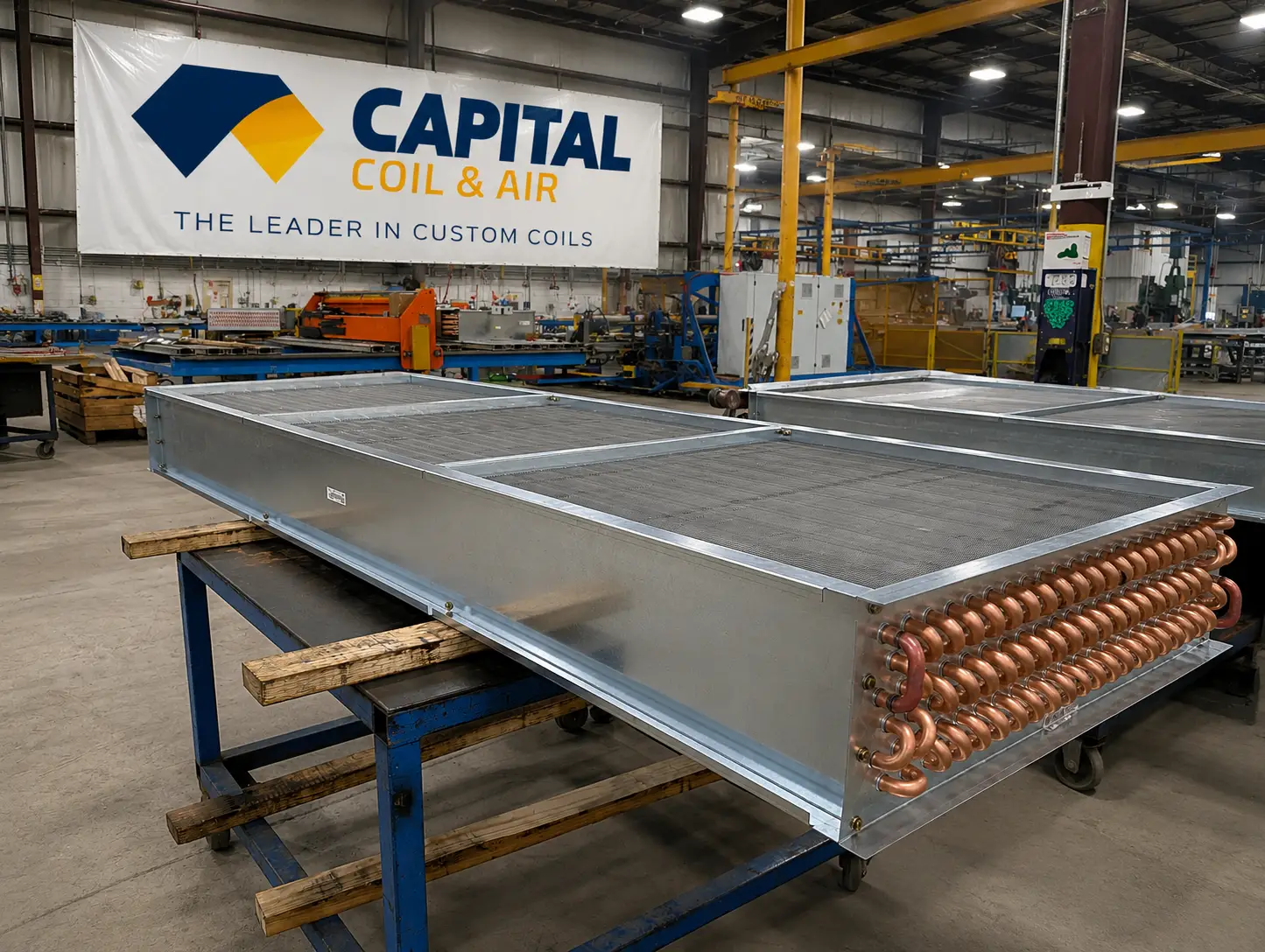
Face velocity = Airflow (CFM) ÷ Coil face area (square feet)
Avoid Oversized Coil Heights
Capital Coil generally does not build chilled-water or DX evaporator coils taller than approximately 50 inches as a single section.
For a 96-inch-high application, we would typically build two 48-inch coils and stack them with an intermediate drain pan. This improves drainage while making the coils easier to ship, handle and install.
Account for Humidity
A coil handling humid outside air produces more condensation than one handling mostly return air. For example, 95°F dry-bulb and 78°F wet-bulb outside air in Florida contains considerably more moisture than typical return air in the Northeast.
Climate, outside-air percentage and entering-air conditions must be considered when sizing the coil and drain pan.
Fin Type Is Not the Solution
Copper, aluminum, corrugated, flat and spiral fins can all experience moisture carryover. Fin characteristics may affect how water behaves, but proper face velocity, coil height, air distribution and drainage are more important.
Check Airflow After Replacing a Coil
Old coils often become clogged with dirt and restrict airflow. A clean replacement coil may have less resistance, allowing airflow and face velocity to increase.
After installing a new cooling coil, verify:
- System airflow and coil face velocity
- Air distribution across the coil
- Drain-pan size and slope
- Condensate drain and trap design
- Evidence of water downstream
SUMMARY
What is the most common cause of cooling coil moisture carryover?
Excessive air velocity through the coil is one of the most common causes. High face velocity can pull condensation from the fins before it reaches the drain pan.
Can a chilled-water coil cause moisture carryover?
Yes. Any chilled-water coil operating below the entering air’s dew point can produce condensation and experience moisture carryover.
Can a DX evaporator coil cause moisture carryover?
Yes. DX evaporator coils remove moisture while cooling the air and can experience carryover when airflow, coil height or drainage is unsuitable.
Need Help With a Replacement Cooling Coil?
Capital Coil & Air manufactures replacement chilled-water and DX evaporator coils for commercial HVAC systems. Contact us for help evaluating coil dimensions, airflow, configuration and drainage requirements.
RELATED POSTS
10 Things You Need to Know About Chilled Water Coils
Top 10 Chilled Water Coil Facts
Chilled Water Coil Circuiting Made Easy
Tags: Capital Coil & Air, Chilled Water Coils, Circuiting, Commercial Coils, cooling coils, Direct Expansion Coils, DX Coils, Evaporator Coils, Facilities, HVAC Coils, HVAC Manufacturers, HVAC Techs, OEM Replacement Coils, Quick-ships, replacement coils, Service Managers, water coils